التعلّم الهجين مقابل التعلّم عبر الإنترنت: فهم الاختلافات والفوائد
تعرّف على الفروق الرئيسية بين التعلّم الهجين والتعلّم عبر الإنترنت، وفوائدهما، وكيف يلبّيان احتياجات المتعلمين المتنوعة. يقدّم هذا الدليل رؤى تساعدك على اتخاذ خيارات تعليمية مدروسة.
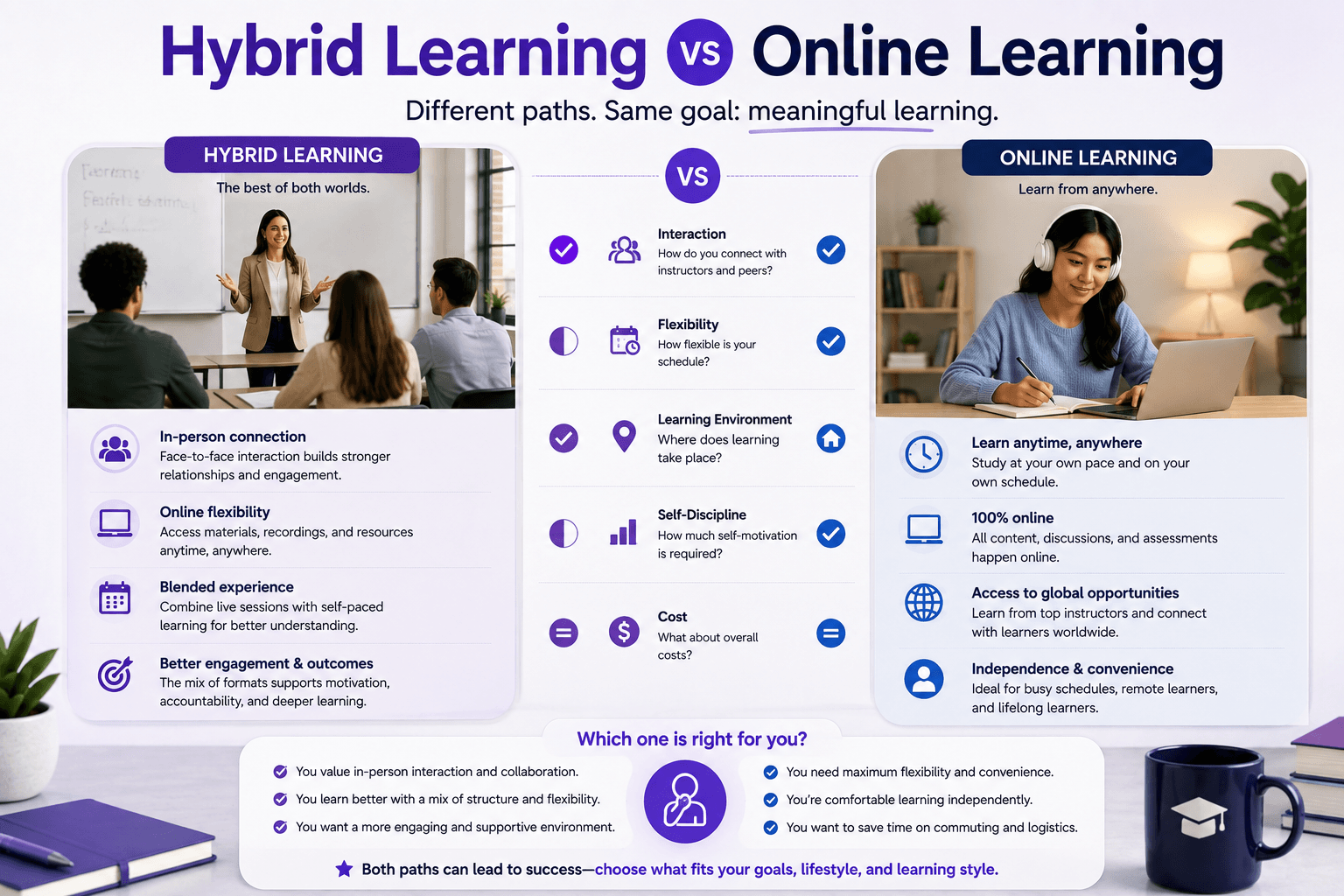
يمثّل التعلّم الهجين والتعلّم عبر الإنترنت نهجين مختلفين للتعليم في العصر الرقمي. ويُعد فهم الفروق بينهما أمرًا أساسيًا للمتعلمين الباحثين عن الخيار الأنسب لاحتياجاتهم التعليمية.
ما التعلّم الهجين؟
يجمع التعلّم الهجين، المعروف أيضًا باسم التعلّم المدمج، بين المقررات الدراسية عبر الإنترنت والجلسات الحضورية المجدولة. وعادةً ما يوزّع هذا النموذج عبء الدراسة بين حضور الصفوف بنسبة تتراوح بين 25% و50%، وإنجاز الجزء المتبقي عبر الإنترنت. يتيح هذا النهج للطلاب التفاعل مع المحتوى الرقمي والتواصل المباشر وجهًا لوجه مع المدرّسين والأقران، ما يعزّز تجربة التعلّم عمومًا.
ما التعلّم عبر الإنترنت؟
على النقيض من ذلك، يجري التعلّم عبر الإنترنت بالكامل في بيئة رقمية. وينجز الطلاب مقرراتهم الدراسية دون اشتراط الحضور الشخصي، ما يمنحهم أقصى قدر من المرونة من حيث الموقع والجدول الزمني. ويفيد هذا النمط على نحو خاص من يفضّلون التعلّم بالوتيرة التي تناسبهم ووفق جدولهم الخاص.
لماذا يُعد ذلك مهمًا؟
يمكن أن يؤثر الاختيار بين التعلّم الهجين والتعلّم عبر الإنترنت تأثيرًا كبيرًا في التجربة التعليمية للطالب. ويساعد فهم نقاط القوة والضعف في كل نموذج المتعلمين على مواءمة خياراتهم التعليمية مع أهدافهم الشخصية والمهنية.
كيف يعمل التعلّم الهجين؟
في بيئة التعلّم الهجين، يشارك الطلاب عادةً في مجموعة من الأنشطة عبر الإنترنت وأخرى حضورية. فعلى سبيل المثال، قد يحضر الطالب المحاضرات شخصيًا وينجز الواجبات عبر الإنترنت. ويتيح هذا النموذج التفاعل في الوقت الفعلي، بما يسمح بالحصول على ملاحظات فورية والتعاون بين الأقران. وتشير الأبحاث إلى أن النماذج الهجينة قد توفّر توازنًا أفضل للطلاب الذين يوازنون بين مسؤولياتهم الأكاديمية والشخصية، إذ أشار 84.31% من الطلاب إلى المرونة باعتبارها سببًا رئيسيًا لتفضيلهم بيئات التعلّم الهجين [7].
ماذا تقول الأبحاث؟
تسلّط دراسات عديدة الضوء على فوائد التعلّم الهجين مقارنةً بالأنماط التقليدية عبر الإنترنت. فعلى سبيل المثال، وجدت مراجعة تحليلية تلوية أن أنماط التعلّم الهجين أكثر فاعلية بكثير من الأنماط الحضورية، في حين لا توجد فروق في الفاعلية بين المقررات التي تُقدَّم عبر الإنترنت فقط وتلك الحضورية [11]. علاوةً على ذلك، أفاد 59% من الطلاب بأنهم شعروا بقدر أكبر من التحفيز عند استخدام نماذج التعلّم الهجين [6]. ويشير ذلك إلى أن الجمع بين التفاعل الرقمي والتواصل وجهًا لوجه يمكن أن يعزّز المشاركة ونتائج التعلّم.
أمثلة عملية
تأمّل متعلمًا يوازن بين العمل والدراسة. يتيح له البرنامج الهجين حضور الصفوف الأساسية شخصيًا، مع إنجاز معظم مقرراته الدراسية عبر الإنترنت، ما يمنحه المرونة اللازمة لإدارة وقته بفاعلية. ويمكن أن يفيد هذا النموذج المدربين والمعلمين أيضًا، إذ يتيح استخدام أساليب تدريس متنوعة تلائم أنماط التعلّم المختلفة. فعلى سبيل المثال، يمكن للمدرب استخدام وحدات عبر الإنترنت لتقديم المحتوى التأسيسي، والاستعانة بالجلسات الحضورية لإجراء النقاشات والأنشطة التطبيقية.
أخطاء أو مفاهيم خاطئة شائعة
من المفاهيم الخاطئة الشائعة أن التعلّم عبر الإنترنت يفتقر إلى صرامة الصفوف الحضورية. لكن الأبحاث تُظهر أن التعليم عبر الإنترنت يمكن أن يكون بفاعلية الأنماط التقليدية نفسها، ولا سيما عند تطبيقه على نحو جيد [11]. وقد يفترض البعض أيضًا أن التعلّم الهجين مخصص للطلاب الأصغر سنًا فقط، إلا أن البالغين والمهنيين يمكنهم هم أيضًا الاستفادة كثيرًا من هذا النهج المرن.
ما الذي يعنيه ذلك للمتعلمين؟
ينبغي أن يستند اختيار المتعلمين بين التعلّم الهجين والتعلّم عبر الإنترنت إلى تفضيلاتهم الفردية وأنماط تعلّمهم وظروف حياتهم. يوفّر التعلّم الهجين فرصًا للتفاعل الاجتماعي والدعم الشخصي، ما قد يعزّز التحفيز والمساءلة. أما التعلّم عبر الإنترنت، فيقدّم مرونة لا تضاهى، إذ يتيح للطلاب تصميم تجاربهم التعليمية بما يتناسب مع جداولهم الفريدة [2].
توصيات عملية
عند الاختيار بين التعلّم الهجين والتعلّم عبر الإنترنت، ضع في اعتبارك ما يلي:
-
قيّم أسلوب تعلّمك: إذا كنت تزدهر بالتفاعل والتعاون، فقد يكون التعلّم الهجين أنسب لك. أما إذا كنت تفضّل الاستقلالية والمرونة، فقد يكون التعلّم عبر الإنترنت الخيار الأفضل.
-
قيّم جدولك الزمني: فكّر في مقدار الوقت الذي يمكنك تخصيصه بصورة واقعية للصفوف الحضورية مقارنةً بالمقررات الدراسية عبر الإنترنت.
-
استكشف المقررات المتاحة: ابحث في البرامج المحددة المتاحة لتفهم كيفية دمجها بين العناصر عبر الإنترنت والعناصر الحضورية.
القيود والاعتبارات
مع أن التعلّم الهجين يقدّم فوائد كثيرة، فمن المهم مراعاة التحديات المحتملة. فعلى سبيل المثال، يجب أن يكون الطلاب مرتاحين لاستخدام التكنولوجيا وقادرين على إدارة وقتهم بفاعلية. إضافةً إلى ذلك، قد تختلف فاعلية التعلّم الهجين تبعًا لجودة تصميم المقرر ومستوى الدعم المقدّم للطلاب والمدرّسين.
الخلاصة
لكل من نماذج التعلّم الهجين والتعلّم عبر الإنترنت مزايا وتحديات خاصة به. ومن خلال فهم هذه الاختلافات، يستطيع المتعلمون اتخاذ قرارات مدروسة تتماشى مع أهدافهم التعليمية وظروفهم الشخصية. ومع استمرار تطور التعليم، يبرز التعلّم الهجين كنموذج قوي يجمع أفضل ما في العالمين، إذ يوفّر المرونة دون التضحية بالتواصل الاجتماعي والمشاركة.
الأسئلة الشائعة
1. ما الفرق الرئيسي بين التعلّم الهجين والتعلّم عبر الإنترنت؟
يجمع التعلّم الهجين بين المقررات الدراسية عبر الإنترنت والجلسات الحضورية، بينما يجري التعلّم عبر الإنترنت بالكامل بصيغة رقمية.
2. أي نموذج تعلّم أفضل للتفاعل الاجتماعي؟
يتيح التعلّم الهجين عادةً مزيدًا من التفاعل الاجتماعي بفضل مكوّناته الحضورية، ما يعزّز الروابط بين الطلاب والمدرّسين.
3. هل يمكن أن يكون التعلّم الهجين بفاعلية التعلّم التقليدي في الصفوف؟
تشير الأبحاث إلى أن التعلّم الهجين قد يكون أكثر فاعلية من التعلّم الحضوري التقليدي، إذ يعزّز المشاركة والنتائج [11].
4. ما فوائد التعلّم عبر الإنترنت؟
يوفّر التعلّم عبر الإنترنت المرونة، إذ يتيح للطلاب إنجاز مقرراتهم بالوتيرة التي تناسبهم ومن أي مكان، ما يجعله مثاليًا لمن لديهم جداول مزدحمة [2].
5. كيف أختار بين التعلّم الهجين والتعلّم عبر الإنترنت؟
ضع في اعتبارك أسلوب تعلّمك وجدولك الزمني والخيارات المحددة التي يوفّرها كل برنامج لتحديد النموذج الأنسب لاحتياجاتك.